
Table of Contents
-
Automation and Robotics
-
Artificial Intelligence and Machine Learning
-
Internet of Things (IoT)
-
Warehouse Management Systems (WMS)
-
Wearable Technology
-
Blockchain for Supply Chain Transparency
-
Benefits of Integrating Technology in Warehousing
-
Conclusion
Industrial warehousing is experiencing unprecedented change as new technologies continue to advance efficiency, safety, and transparency. Businesses across the country are reimagining their storage and distribution environments by embracing these changes. For companies exploring solutions such as industrial warehousing South Carolina, understanding these tech trends is essential to navigating a rapidly evolving market.
Modern warehousing transcends mere storage, focusing on rapid fulfillment, inventory accuracy, and cost-efficiency. Technological advancements such as robotics, AI, IoT sensors, and blockchain are integral to effective warehouse management, enhancing competitiveness and adaptability to customer demands and supply chain complexities. This digital transformation promotes safer work environments and addresses workforce shortages through automation, resulting in a smarter, safer, and more agile industry better poised to address ongoing challenges.
Automation and Robotics
One of the most impactful trends in warehouse modernization is the adoption of automation and robotics. Automated Guided Vehicles and Autonomous Mobile Robots are rapidly replacing manual material handling, increasing throughput and minimizing human error. These advanced machines can perform complex tasks such as picking, transporting, and packing around the clock, accelerating order fulfillment and driving operational consistency.
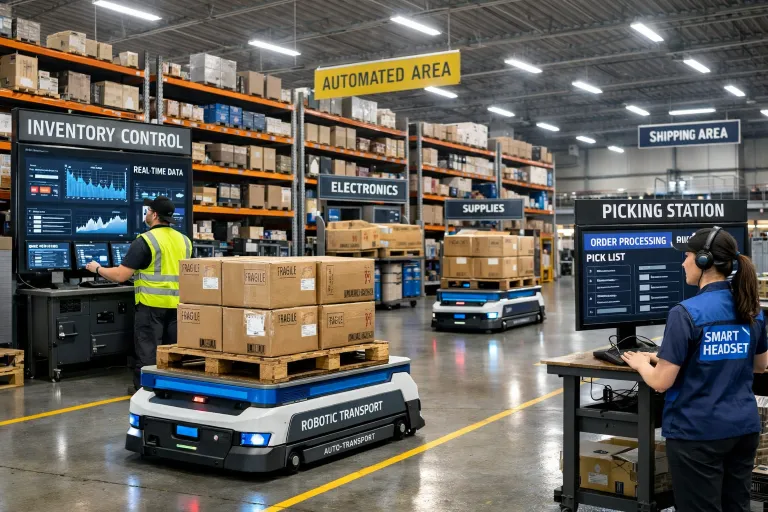
Robotic systems also help address labor shortages, allowing staff to focus on higher-value activities. For example, Amazon and other industry leaders have invested heavily in robotics, resulting in reduced overhead costs and fewer workplace injuries. Automation is no longer reserved for the largest operations; it is now accessible to mid-sized and even smaller warehouses as technology prices decrease.
Artificial Intelligence and Machine Learning
Artificial Intelligence and Machine Learning are optimizing how warehouses process data and make decisions. These technologies use information from various sources to forecast demand, balance stock levels, and streamline complex workflows. AI-powered systems can reduce forecasting errors by up to half, which means better stock management and less waste, especially in sectors like food and beverage.
AI is also used for route optimization and predictive maintenance, thereby increasing equipment lifespan and improving delivery times. While there are concerns about workforce displacement, many industry leaders emphasize that AI should enhance rather than replace human capabilities, fostering a collaborative environment that leverages both technology and expertise.
Internet of Things (IoT)
The Internet of Things connects physical devices, from sensors to smart shelves, creating a web of data points that can be monitored and acted upon in real time. With IoT, warehouse managers gain detailed insights into inventory levels, temperature, humidity, and machine health. This enhanced visibility helps prevent stockouts, ensure optimal storage conditions, and avoid equipment failures.
IoT technology has been a game-changer for cold storage and high-value inventory, where even small environmental changes can result in costly losses. By automating the monitoring and reporting of these metrics, warehouses can maintain higher quality and compliance standards, reducing the likelihood of costly errors or product spoilage.
Warehouse Management Systems (WMS)
A Warehouse Management System serves as the operational hub for inventory and workflow tracking. Today’s WMS platforms integrate seamlessly with robotics, IoT, and transportation management systems, creating a unified, synchronized warehouse ecosystem. Using a WMS equips organizations with real-time data to inform everything from order fulfillment sequencing to labor allocation.
WMS investments provide measurable returns through faster, more accurate order processing and reduced administrative overhead. These systems also deliver flexibility, supporting multi-channel fulfillment strategies to accommodate growing e-commerce demands. Leading providers offer cloud-based solutions that allow companies to scale their operations without prohibitive infrastructure investments.
Wearable Technology
Wearables such as smart glasses, headsets, and wrist scanners are improving worker productivity and safety within warehouses. These devices offer hands-free access to picking instructions, voice commands, and real-time updates, reducing errors and allowing faster fulfillment. In high-activity environments, wearables enable supervisors to track employee location and safety metrics, such as fatigue or hazardous exposure.
The integration of wearable technology helps companies speed up onboarding processes for new staff and ensures compliance with health and safety guidelines. By offloading mundane tasks and streamlining information delivery, companies see a direct improvement in throughput and worker satisfaction.
Blockchain for Supply Chain Transparency
Blockchain solutions are creating unprecedented supply chain transparency by providing a secure, unchangeable ledger for tracking products from origin to destination. This technology ensures that all transactional data is visible to key stakeholders, reducing the possibility of fraud and streamlining dispute resolution.
In regulated industries such as pharmaceuticals and food, blockchain makes it easier to verify compliance with safety regulations. It also supports sustainability and ethical sourcing initiatives by establishing a traceable record of each step a product takes through the chain of custody.
Benefits of Integrating Technology in Warehousing
Increased operational efficiency is achieved through automation and artificial intelligence (AI), which streamlines manual processes and reduces errors, leading to a significant boost in output. The implementation of the Internet of Things (IoT) and Warehouse Management Systems (WMS) enhances inventory accuracy by providing detailed control over stock, ensuring reliable order fulfillment. Robotics, AI, and wearable technology collectively contribute to faster order fulfillment by minimizing delays and optimizing delivery times. These advanced technologies also facilitate cost reductions by decreasing waste, lowering labor expenses, and streamlining administrative tasks. Furthermore, digital systems enhance scalability, enabling warehouses to respond swiftly to market fluctuations and support seamless growth. The automation of hazardous material handling and real-time health monitoring contributes to safer work environments, protecting employee well-being. For warehouses aiming to optimize performance amidst increasing complexity and competition, adopting these technologies is essential. Automation, AI, IoT, and other innovations empower warehouses to deliver faster, safer, and more reliable services, establishing a robust foundation for sustainable business growth and operational excellence.
Conclusion
In conclusion, the integration of advanced technologies is reshaping modern warehousing into a highly efficient, data-driven, and adaptable ecosystem. From automation and robotics to AI, IoT, and blockchain, each innovation plays a critical role in improving accuracy, speed, and overall operational performance. These tools not only streamline processes and reduce costs but also enhance workplace safety and scalability in an increasingly competitive market. As demand for faster and more reliable fulfillment continues to grow, embracing these technologies is no longer optional but essential. Warehouses that invest in smart solutions today are better positioned to meet future challenges, drive innovation, and achieve long-term success.