

Key Takeaways
- Small cracks can allow water to reach the pavement base and accelerate deterioration.
- Standing water often signals a drainage, grading, or settlement issue that deserves attention.
- Heat, freezing conditions, traffic, snow removal, and oxidation all place stress on asphalt.
- Regular inspections make it easier to schedule the right repair before damage becomes widespread.
- Crack sealing, patching, resurfacing, and replacement each suit different pavement conditions.
Table Of Contents
- Why Asphalt Damage Starts Small
- The Main Causes of Asphalt Wear
- A Simple Asphalt Inspection Checklist
- Why Drainage Deserves Early Attention
- Choosing the Right Repair
- A Seasonal Maintenance Plan for 2026
- Safety Checks for Driveways and Parking Lots
- Common Questions About Asphalt Care
- Conclusion
Asphalt rarely fails without first showing warning signs. A narrow crack, a soft driveway edge, a shallow dip, or a puddle that lingers after rain can look minor, but each may point to a problem below the surface. Catching those clues early can help homeowners, property managers, and business owners avoid a much larger repair later. A qualified asphalt contractor La Porte, IN, can help assess visible pavement damage, but a simple routine inspection is still valuable. When owners understand what to look for, they can document changes, prioritize safety concerns, and make repair decisions based on pavement condition rather than waiting for a pothole to appear.
Why Asphalt Damage Starts Small
Asphalt is designed to flex slightly under normal use, but water and repeated weight can weaken that flexibility. When a crack opens, moisture can move through the surface and into the base layers that support the pavement. If those layers lose strength, traffic loads press down on a weaker area, and the surface begins to break apart. For example, a small crack near the outer edge of a driveway may widen after a series of storms. Over time, the edge can crumble, the soil beside it can erode, and vehicles may create a low spot or a pothole in the same location. Repairing the crack while the surrounding pavement is stable is often far simpler than rebuilding the failed section.
The Main Causes of Asphalt Wear
Most pavement damage results from several forces working together, not from a single isolated issue. The main causes include:
- Water: Rain, melting snow, runoff from downspouts, and poor drainage can weaken asphalt and the material underneath it.
- Temperature changes: Freezing and thawing can expand existing cracks and create movement below the pavement surface.
- Traffic: Frequent turning, braking, delivery vehicles, and heavy loads can cause rutting and stress points.
- Sun and oxidation: Long exposure to sunlight can make asphalt fade, dry out, and become less flexible.
Soil conditions, installation quality, pavement thickness, traffic volume, and local weather also affect how long asphalt lasts. A low-traffic driveway and a busy commercial lot may have similar surface cracks, yet require very different maintenance plans.
A Simple Asphalt Inspection Checklist
Walk the pavement slowly at least twice each year, ideally once in spring and once in fall. Spring inspections reveal damage from winter weather, while fall inspections give owners time to address issues before moisture and freezing conditions return.
Warning Signs to Look For
- Thin straight cracks, wide cracks, or connected web-like cracking
- Potholes, loose patch material, or broken pavement edges
- Ruts in travel lanes, loading areas, and frequent turning zones
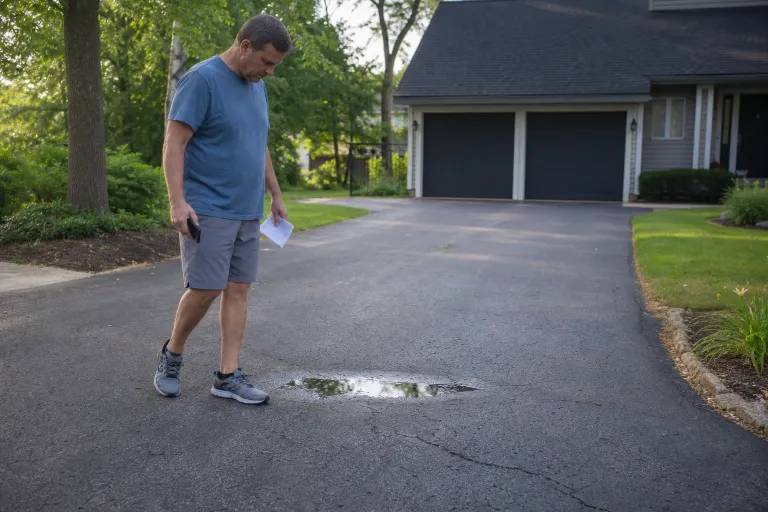
- Pooling water that remains after nearby areas have dried
- Raised pavement caused by roots, frost, or shifting soil
- Oil stains, debris buildup, blocked drains, and loose gravel
- Faded parking lines, directional arrows, or accessible parking markings
Document What You Find
Take clear photos, note the date and recent weather, and mark the location on a simple property sketch. Compare the same areas after heavy rain, a hard freeze, or a busy season. This record can show whether a defect is stable, expanding, or returning after previous repairs.
Why Drainage Deserves Early Attention
Water management should be a central part of any asphalt care plan. Ponding water can create traction concerns and contribute to pavement deterioration. The Federal Highway Administration explains in its guide to maintaining drainage features for safety that standing water on road surfaces can increase the risk of hydroplaning and skidding. Check storm drains, catch basins, downspouts, ditches, swales, pavement edges, curbs, and low areas near sidewalks. Leaves, soil, mulch, and gravel can block water flow. Cleaning a drain may solve a one-time issue, but water repeatedly returning to the same spot may indicate poor drainage, settlement, rutting, or a weakened base.
Choosing the Right Repair
The right repair depends on the size, depth, cause, and location of the damage. A surface treatment cannot correct a failed base, while full replacement may be unnecessary for structurally sound pavement.
- Crack sealing: Often appropriate for narrow to moderate cracks before water reaches lower layers.
- Patch repair: Useful for isolated potholes and small failed sections.
- Surface treatment: Can help protect sound pavement showing early aging or oxidation.
- Resurfacing: May suit broad surface wear when the underlying structure remains stable.
- Full depth repair or replacement: May be needed for recurring failure, settlement, deep rutting, or extensive alligator cracking.
The Federal Highway Administration identifies crack sealing, patching, surface treatments, and overlays as common pavement preservation activities.
A Seasonal Maintenance Plan for 2026
Spring
Inspect for winter cracks, potholes, broken edges, and low spots. Clear salt, sand, leaves, and debris, then check drains after heavy spring rain.
Summer
Watch for soft spots, tire marks, and rutting in hot weather areas. Inspect loading zones, dumpster pads, entrances, and places where vehicles turn sharply. Clean oil spills promptly.
Fall
Seal suitable cracks, remove leaves from drainage areas, trim plants that block runoff, and schedule larger repairs before freezing conditions arrive.
Winter
Protect fragile pavement edges during snow removal, avoid piling snow where meltwater crosses cracks, and watch for new potholes after thawing and refreezing.
Safety Checks for Driveways and Parking Lots
Asphalt maintenance affects more than appearance. Deep potholes, uneven walking paths, standing water near entrances, loose edges, and faded markings can affect drivers, pedestrians, delivery workers, and visitors. Commercial properties should keep an inspection log to track complaints, repairs, priorities, and recurring concerns.
Common Questions About Asphalt Care
How often should asphalt be inspected?
Inspect at least twice a year and after major storms, flooding, or severe freeze and thaw conditions. High traffic properties may need more frequent checks.
Are small cracks worth repairing?
Yes. Small cracks are usually easier to address before they widen, collect water, or develop into potholes.
When is a patch not enough?
A patch may not last if there is unstable soil, repeated water intrusion, deep cracking, or settlement beneath the surface. Repeated failure is a reason to investigate the cause, not just repair the visible hole.
Final Thoughts
A practical asphalt care plan starts with regular observation. Inspect the surface, document any changes, keep water moving, and address small defects before they become larger, more expensive problems. By considering weather, drainage, traffic, soil conditions, and daily use together, property owners can make more informed repair decisions throughout 2026. Routine inspections after heavy rain, freezing temperatures, or periods of high traffic can help identify cracks, potholes, edge deterioration, and drainage issues before they worsen. Prompt maintenance not only extends pavement life but also improves safety for vehicles and pedestrians while reducing long-term repair costs. A consistent, preventive approach helps preserve both the appearance and structural performance of asphalt throughout the year.